Gene’s Car Tips

You Love Your Car, Let’s Keep It Around

You Love Your Car

You love your car even though the new car smell has long since vanished.

You baby it. You pamper it. You keep it clean inside and out. Maybe you’ve even named it.

Because you have a strong bond with this vehicle, you want it to live a good, long life. Some folks keep their cars and trucks rolling down the road for well over 200,000 miles. How can you be one of them?

The best way is to give your car the tender loving care it deserves.

A little TLC

First off, we suggest following the carmaker’s maintenance schedule. You can find it in your car’s owner’s manual. It spells out when to take care of every service for the life of your vehicle. This includes routine oil and filter changes, tire rotations, timing belt replacements, and other services.

If you haven’t kept up with maintenance so far, don’t give up! Bring your car in so we can get you caught up. Then you can start fresh and get back on schedule, extending the life of Yogi, Goldie, Arya, or Vlad.

Also, don’t skimp by using cheap parts or fluids. No-name belts, hoses, transmission fluids, and the like may be cheaper today. But, they will cost you in the long run. This includes fuel. If your vehicle requires high-octane gasoline, regular or mid-grade fuel might cause damage. We never cut corners with cut-rate products—we don’t want you to, either.

Finally, it may sound like it’s too easy to be true, but keep your car clean. Washing and waxing do more than make your car look great. It preserves the paint and prevents rust. Grit and dirt that acts like sandpaper on carpets and upholstery. You can make these surfaces last longer by regularly vacuuming. Remember, a clean car is a happy car!

We’ll Breath More Life into Your Vehicle

We want to keep Rhonda (the Honda) on the road and make sure you feel great about having a car that is safe and reliable. We can keep you on schedule with maintenance and inspections so we can stop small issues from becoming big problems. Because we only use high-quality parts and fluids you never have to worry if Rollie (the Corolla) is getting the best treatment possible. You’ll get treated right, too, with responsive customer service and great pricing.

Breathe more life into Casper, Frank, Ladybug, or Cheeto. Make an appointment online or call 253-854-6762 now!

When Good Thermostats Go Bad: Understanding the Heart of Your Car’s Cooling System

When Good Thermostats Go Bad

Today’s vehicles are marvels of modern engineering, packed with high-tech components that make driving safer and more efficient. But some of the most critical parts are surprisingly low-tech, like your car’s thermostat. It might shock you to learn that this essential piece of equipment operates using something as simple as wax.

How Does a Thermostat Work? The Power of Wax in Action

Your car’s thermostat is a crucial player in the engine’s cooling system. Positioned between the engine and the radiator, the thermostat’s job is to regulate the flow of coolant, ensuring the engine warms up properly without overheating. When you start your car, the thermostat blocks coolant from flowing to the radiator, allowing the engine to reach its optimal operating temperature—usually around 200 degrees Fahrenheit. Once it hits that sweet spot, the thermostat opens up, allowing coolant to flow freely and maintain a balanced temperature.

Here’s the fascinating part: It’s all done with wax!

Yes, you read that right. The thermostat relies on the expansion of wax to function. Inside the thermostat, there’s a small cylinder filled with wax. As the engine heats up, the wax begins to melt at around 180 degrees Fahrenheit (though this temperature can vary slightly depending on the design). As the wax melts, it expands and pushes a rod connected to the valve, opening it and allowing coolant to circulate through the engine.

This simple yet effective mechanism is remarkably reliable. But, like all things mechanical, thermostats can go bad. And when they do, they can cause some serious headaches.

When Thermostats Fail: The Consequences of a Bad Thermostat

Given their reliability, thermostats are often overlooked—until they fail. And when they do, your vehicle’s engine is at risk of overheating. Here are some common reasons why a thermostat might go bad:

  • Prior overheating damage: If your engine has overheated in the past, it could have damaged the thermostat, causing it to malfunction.
  • Corrosion: Over time, the thermostat can corrode, especially if the coolant hasn’t been changed regularly.
  • Wear and tear: Like any component, thermostats can simply wear out with age.

When a thermostat fails, it often gets stuck in one position—either open or closed—and both scenarios can lead to trouble.

Burning the Thermostat at Both Ends: What Happens When It Sticks Open or Closed

If your thermostat fails in the closed position, the coolant won’t flow to the radiator, causing the engine to overheat quickly. This can lead to severe engine damage if not addressed promptly. You might notice the temperature gauge rising rapidly, and if you continue driving, you could end up with a blown head gasket or worse.

On the flip side, if the thermostat gets stuck in the open position, coolant flows continuously through the engine. While this might sound harmless, it actually prevents the engine from reaching its optimal operating temperature. As a result, you could experience:

  • Lower than normal temperature readings: Your temperature gauge may show that the engine isn’t warming up properly.
  • Inefficient heating: The cabin heater might not get as warm as it used to, leaving you chilly on cold days.
  • Poor drivability: In cooler weather, your car might struggle to perform, especially during the first few minutes of driving.
  • Reduced fuel efficiency: An engine that doesn’t reach its optimal temperature can burn more fuel, leading to a decrease of 2 to 3 miles per gallon.
  • Increased emissions: Your car could emit more pollutants, contributing to environmental harm.

In short, a stuck thermostat—whether open or closed—can cause a cascade of problems that affect your vehicle’s performance and longevity.

Upon Closer Inspection: Why Regular Maintenance Matters

At our shop, we take your vehicle’s health seriously. Part of our job is to catch issues like a failing thermostat before they turn into bigger, more expensive problems. During routine inspections, we check components like the thermostat to ensure everything is in good working order.

We understand that some customers are wary of what they perceive as “upselling” during inspections, sometimes referred to as a “laundry list” of recommended repairs. However, it’s important to remember that reputable shops prioritize your safety and the longevity of your vehicle. Businesses that push unnecessary services don’t stay in business long. Trustworthy shops, especially those with a long history—like ours, which has been serving customers since 1978—are focused on keeping you informed and safe on the road.

Final Thoughts: Trust the Experts for Your Vehicle’s Health

Your car’s thermostat might be a small part, but it plays a big role in keeping your engine running smoothly. When it goes bad, the consequences can range from annoying to catastrophic. That’s why it’s crucial to stay on top of regular maintenance and trust professionals to handle repairs.

At Certified Automotive Specialists, we’re dedicated to providing top-notch service and ensuring your vehicle is in the best possible condition. Whether it’s spotting a failing thermostat or addressing other maintenance needs, you can count on us to prioritize your safety and satisfaction. We’ll help you navigate necessary repairs, work with your budget, and make sure your car is ready to hit the road with confidence.

When it comes to your vehicle, don’t take chances with quick fixes or neglecting maintenance. Keep it in top shape by trusting experts who care as much about your car as you do.

What Does That Warning Light Really Mean?

It doesn’t matter if they are yellow, orange, or red. You probably feel a pang of anxiety when a warning light flares up on your dashboard.

Why?

It’s most likely because you’re not sure what the light means. That’s why we’re here. We’ll break it down and take the mystery out of it. We want you to know how to respond so you can keep your car around as long as you need it!

Oil Pressure Light

Your oil pressure warning light is usually signified by an old fashioned oil can. It can flicker on briefly when you first start your car then turn off almost immediately. If the light remains lit, you must turn off the engine ASAP and check the oil level. If it is low, add some oil and start your car back up. You are good-to-go if the light stays off. Still lit up? Do not drive your vehicle! No or very low oil pressure causes severe engine damage. Give us a call and we’ll talk to you about your options, which might include towing your vehicle to our shop.

Temperature Light

The temperature light—often displayed as a thermometer above water—is telling you that your engine is overheating.  Pull over and turn off your car immediately! Let your engine rest for at least 30 minutes before checking anything. If you try to remove the radiator cap immediately, you can be seriously burned by escaping steam and water. Once things have cooled down, remove the cap and check the coolant mixture level. If it’s low, add the appropriate 50/50 mix of antifreeze and water.

The only way to know for sure if everything is okay with your cooling system is to pressure test for internal links. This is best left to professionals. Call us and we’ll work out a game plan, including making arrangements to get your car to the shop so we can get it fixed and back out on the road!

Brake Light

The brake warning light is often a red circle with an exclamation point inside. It lights when you engage the parking or emergency brake. Make sure the parking brake is fully disengaged. If that does the trick, you’re fine. If it doesn’t flicker off, you might have a fluid leak. This can be quite dangerous, causing your brakes to fail or veer to one side. It is best to bring your car in as soon as you can to get your brake fluid checked. You want to be sure you have full braking capability when you need to stop in a hurry or road conditions are slick!

Alternator Light

A red battery with plus and minus signs indicates trouble with your alternator and tells you your charging system is not working properly. It might mean a slipping belt drive or some other issue. Calling us sooner rather than later will save you from getting stranded somewhere inconvenient, or even dangerous.

Check Engine Light

An illuminated orange motor icon once put fear into the hearts of drivers. It now seems that many car owners are capable of ignoring it for miles. This is probably because most of the time it is just saying that your gas cap isn’t on tight enough or something else minor. Even this isn’t insignificant though. It means you’re wasting fuel and polluting the environment. If tightening the cap doesn’t turn the light off after some driving, it means something is wrong that needs to be looked at.

Whenever a warning light remains on, you can refer to your owner’s manual. It will give you general explanations and let you know if it’s safe to continue driving. To speak with helpful professionals about your warning light or other automotive issues, Certified Automotive has great prices, responsive customer service, and the highest-quality workmanship. To figure out what your warning light is trying to tell you, schedule an appointment online with us or call 253-854-6762 today!

Hope For Your Vehicle’s Transmission

Transmission repairs have become an interesting phenomenon in the automotive repair industry. I thought I would share some information with you that could result in saving you money!

  • Most cars will start to experience transmission issues around age six
  • When a check engine light illuminates, 20% of the time it is because of the transmission
  • 50% of those issues can be fixed easily
  • 80% of repair shops, because they don’t have enough knowledge about transmissions will tell you it needs to be replaced. That is because for them it is just easier to replace the entire thing since they don’t know enough about transmissions to fix it or don’t want to be bothered with it.
Hope For Your Vehicles Transmission

Consumers might opt to buy a different car rather than pay to repair their current one if the cost is high. Replacing a transmission is a lot to pay for a repair and if the vehicle will need more of the same, say in six months, I am completely up front with them. I want them to make the right decision for them and for their budget.

If you feel you are having transmission problems, before you pay out an exorbitant amount of money to have it replaced, ask what the problem is exactly. A really good shop, like Certified Auto Specialists, can save you a lot of money! The average repair shop just guesses instead of investigating.

Sometimes, of course, it really does need to be replaced but again, a shop that really knows what they are doing will give you options rather than “just replace it” as a solution.

If you suspect your vehicle is experiencing transmission problems, give us a call!

Certified Auto Specialists: the friendlier and more helpful auto shop! Feel free to call 626-963-0814 with any questions and we will be glad to help, or visit our website at CertifiedAutoCa.com.

Hometown Service You Can Count On!

Oil Consumption

Oil Consumption

Question: How often should you check the oil level in your car?

Every 1,000 miles of driving; the newer the car and the lower the mileage. This seems to be the forgotten “check list” item.

Question: How often do you check the oil level in your car?

Our shop is seeing more cars come in with no visible oil on the dipstick. Granted, the majority of the cars have 75,000 miles or more. Remember, that many cars with smaller engines also have less oil capacity (four quarts or less) to lubricate the moving parts.

When technology builds in lights, bells and whistles to replace opening the hood and pulling a dipstick or visually inspecting the under-hood fluid, I get concerned. The warning systems are great backups but should not replace physically inspecting items.

The reason for the oil consumption concern is due to low tension piston rings used to get better miles per gallon. This causes engines to run hotter than ever to achieve better MPG. Today, lighter oils (0w20 and 5w20) are also used for, you guessed it, better MPG, with 0w16 in the new models coming into production.

The latest change is GDI (gasoline direct injection), which is a completely different way for the fuel injector to deliver the fuel into the engine. Yep, this is for MPG also. Combine all these changes and add the extended oil change interval, and you get major oil consumption.

The car mentioned above, with no oil on the dipstick, also did not have a warning light on to let the driver know what was going on. That tells us the light comes on when the car is beyond critical for the oil level and is doing internal engine damage.

The old adage that an ounce of prevention is worth a pound of cure, in car terms, means servicing your car more, and often equals 200, 300, or even 400,000 miles of driving. We have many customers that have continued success because they adhere to regular servicing of their car!

Certified Auto Specialists: the friendlier and more helpful auto shop! Feel free to call 626-963-0814 with any questions and we will be glad to help, or visit our website at CertifiedAutoCa.com

Hometown Service You Can Count On!

Hometown Service You Can Count On!

Gasoline has been around for decades and the changes to the formulation have been incredible.

The basic refined crude is mostly the same. What makes each brand unique is the additives and detergents package mixed in. Regular fuel has fewer additives than the premium blend.

One of the biggest changes to gasoline is the introduction of ethanol. Ethanol has brought us lower emissions and a little better MPG, but it also has caused some new drivability issues. Most fuels started with a small amount of ethanol; now the base amount is 10%. As we randomly test fuel from the tanks we see as much as 30% ethanol.

What that means is the ethanol and the detergents added do not work together! Ethanol washes the detergent away that is supposed to help stop carbon build up inside the engine. Type “engine carbon” into a browser and there are many articles to scan. The tough part for you, the driver, is you don’t know it’s happening until it gets bad.

How Do You Know When There Is Build-Up?

Hometown Service You Can Count On

Here are the symptoms of carbon build-up:

  • Drivability issues; engine not running smoothly or stalling
  • Engine vibration or shaking
  • Car jerking or surging at stops
  • Check engine light may be on
  • Cold start misfires

The cure is to be proactive by cleaning the fuel injectors and air intake system every 15,000 miles. For most drivers that is once a year. This is great insurance to protect the investment you drive. Previous year cars did not have the carbon concern, so this will be something to be educated on. If ignored the cost to disassemble the engine to clean out the carbon is not pretty.

Cars, year 2000 and newer, have a different type of fuel system than previous years and 2010 and newer have gasoline direct injection (GDI) that is even more susceptible to carbon build-up.

Certified Auto Specialists wants to be your GO-TO place! Feel free to call 626-963-0814 with any questions and we will be glad to help!

What You Need to Know About Oil Changes

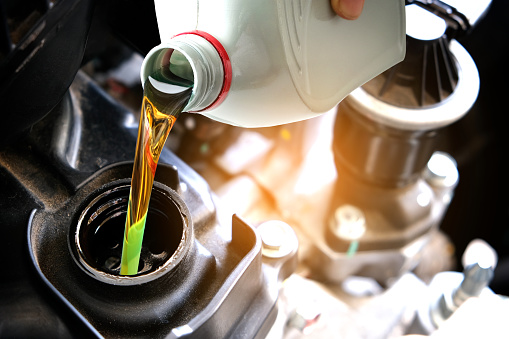
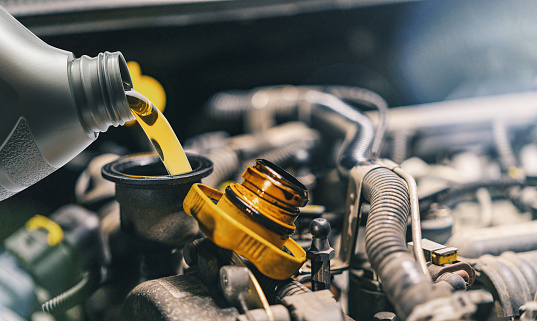
Are you feeling confused about motor oil? Wondering when it’s the right time to change it? How often? What’s the best kind of oil? Here are some answers to the questions you might be asking:

When Should I Change My Oil?

Oil Changes | Auto Repair Service

First off, check your owner’s manual. The answer is in black and white, easy-peasy. Don’t make assumptions based on past experience or the standard 3,000-miles/3 months mantra that’s been chanted for decades. It’s different for each vehicle. Many cars, pickups, and SUVs now have service reminder that monitor and alert drivers when they need to change their oil. These systems can not only monitor miles but also analyze how hard a vehicle is being driven. Make sure you pay attention to these alerts!

How Often Should I Check the Oil Level?

You should keep an eye on your car’s oil levels—even newer cars can need their oil to be topped off between changes. We suggest checking your oil level at least once a month. Some newer cars have electronic oil monitors and don’t have traditional dipsticks. If you have a dipstick and are checking the oil yourself, make sure the car is parked on level ground. Also, be careful of hotspots under the hood if the engine has been running. Remove the dipstick, wipe off the oil, reinsert it and remove it again. The oil level is fine as long as the level is between MIN/MAX, L/H, or two pinholes on the dipstick. 

How Often Should I Change the Oil?

Many automakers now have oil change intervals at 7,500-miles/6 months or even 10,000-miles/12 months. Of the car owners that pay careful attention to these specifications, most focus on mileage instead of time duration. But, if you drive less than average, be sure to follow the recommended time limits to keep your oil fresh. This is because, as oil ages, it becomes less effective. By not getting the engine warm enough, moisture that forms inside the engine is not removed. This leads to shorter engine life.

What Is the Right Oil for My Car?

Again, check your manual. It will tell you the correct weight and whether you should use synthetic or not. Synthetic oil is designed to be more effective and resists breakdown. It lasts longer and withstands higher temperatures. This is especially helpful if you take shorter trips when standard oil doesn’t get warm enough to burn off moisture and impurities. Synthetic oil is also effective for extreme heat or cold, and towing or hauling heavy material.

We all need a change from time to time! Your engine will last a long time if you treat it right. You can keep track of intervals yourself, or leave it up to us. We’ve been honored as the absolute best auto repair shop in America and always provide you with ethical and competent auto care.

Independent or Dealership? What Is Your Best Auto Service Bet?

Auto repair shops are no one’s first-pick as a go-to destination. Still, your car is one of your biggest investments. To protect it and keep it running right, you’ve got to bring it into the shop from time to time.

Because it’s more of a must than a want-to, it’s very important to make sure you pick a service provider that is a quality, cost, and time-efficient choice. So, what is your best bet? An independent auto shop or a dealership?

Consumer Report’s latest repair satisfaction survey showed that you’re likely to end up more satisfied with an independent repair shop than with a new car dealership.

Independent or Dealership

Independent shops outscored dealerships on overall satisfaction, price, quality, customer service, and the work getting done when promised. Only the electric carmaker, Tesla, earned the same marks as independent shops

Tesla, though, has a relatively small number of loyal customers, compared to other sellers of new cars. To be fair, dealership customers reported being satisfied with mechanics at franchised dealerships for overall repairs. Not as satisfied, but satisfied.

Some Key Differences

But, there is a huge discrepancy between independent shops and dealerships in terms of cost. This was true across the board, but particularly true for premium brands such as Mercedes-Benz, Jaguar, and Mini.

This is because of extra overhead costs at dealerships which have larger facilities with higher salaries and many more employees. This not only drives up prices but can also drive up the motivation to upsell you on parts and services that you may not need. Though recommended services are often advisable, due to budget concerns, many customers need to trust their independent shops to tell them what repairs and services are needed now and what can wait.

Other Benefits

An independent shop can also give you better customer service because, at a dealership, you will only speak to a service advisor. This person isn’t usually a mechanic. At an independent shop, you can usually speak directly to the mechanics. These trained technicians are directly responsible for your car and how well it is repaired and serviced. Great independent shops tend to work harder for your business—they know there are a dozen shops nearby that an unsatisfied customer can take their vehicle to. A dealership may be the only one in the region.

Hmm. Way better prices. Better customer service. As good as, or better, quality. Sounds like a great independent auto shop like Certified Automotive—honored as the top auto care shop in America—might just become a vacation hot spot. Okay, that is probably one or two steps too far. But, when you need to protect your automotive investment, schedule an appointment online with us or call 253-854-6762 today!